Is Replacing Countertops Without Replacing Cabinets Worth It in Pensacola?
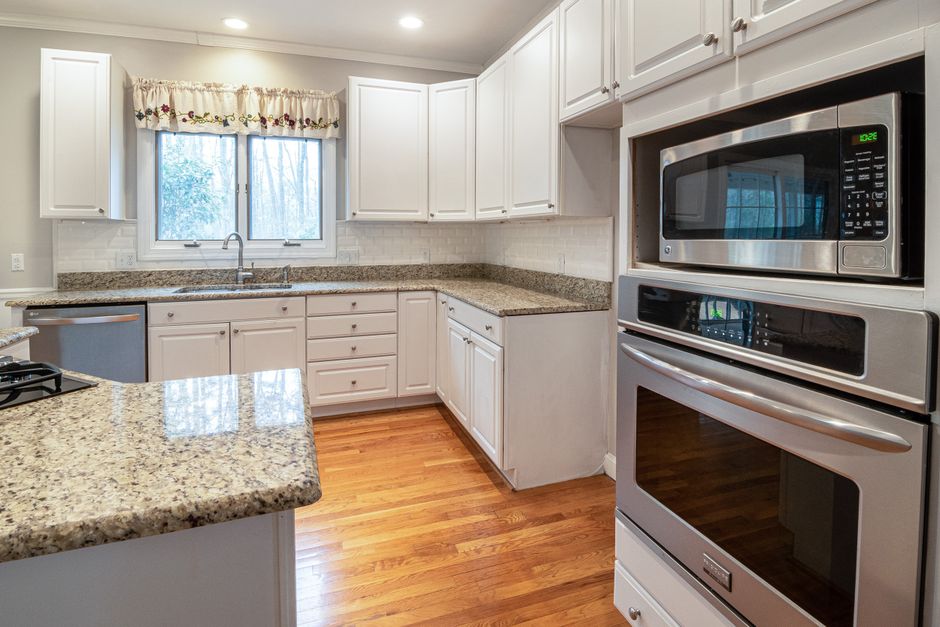
Replacing countertops without replacing the cabinets is worth it when the existing boxes are solid, dry, level and fastened to the wall. If they are, a new top is one of the most efficient ways to change a kitchen. If they are not, new stone on weak cabinets is money spent on top of a problem. The deciding factor is the condition of what sits underneath, and in Pensacola that condition is shaped by humidity, storm history and termites.
Start With the Cabinet Boxes, Not the Countertop
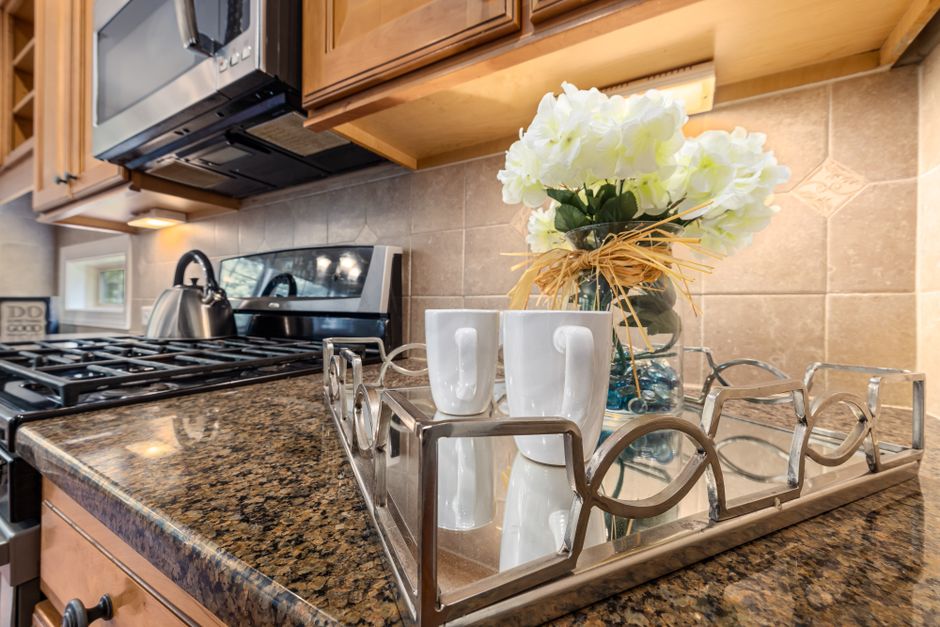
A countertop is only as good as its support. Before you pick a color or an edge, spend an hour inspecting the cabinets you plan to keep.
Check What the Boxes Are Made Of
Open a base cabinet and look at the sides and floor. Plywood holds screws well and tolerates the occasional splash. Particleboard and MDF swell when wet, crumble around screw holes and lose strength permanently once moisture gets in. Particleboard boxes are common in builder-grade kitchens, and they are the type most likely to disqualify a countertop-only plan.
Look Under the Sink First
The sink base takes the most abuse. Press on the cabinet floor and the lower side panels. Soft spots, bubbled laminate, dark staining or a musty smell point to past leaks. In Pensacola's year-round humidity, that damage rarely dries out on its own. If the sink base is compromised, the cabinet that will carry the heaviest and most expensive part of the new top is the one that is failing.
Ask About Flood History
Many Pensacola and Escambia County homes took on water during Hurricane Ivan in 2004 and Hurricane Sally in 2020. Particleboard cabinets that sat in floodwater wick moisture up the panels and can hide mold behind the back panel and toe kick. Cabinets that look dry are not necessarily as good as they were before. If your home or a previous owner's home flooded, treat the boxes with suspicion and look behind them before committing to new stone.
Check for Termites Before Anything Else Goes On
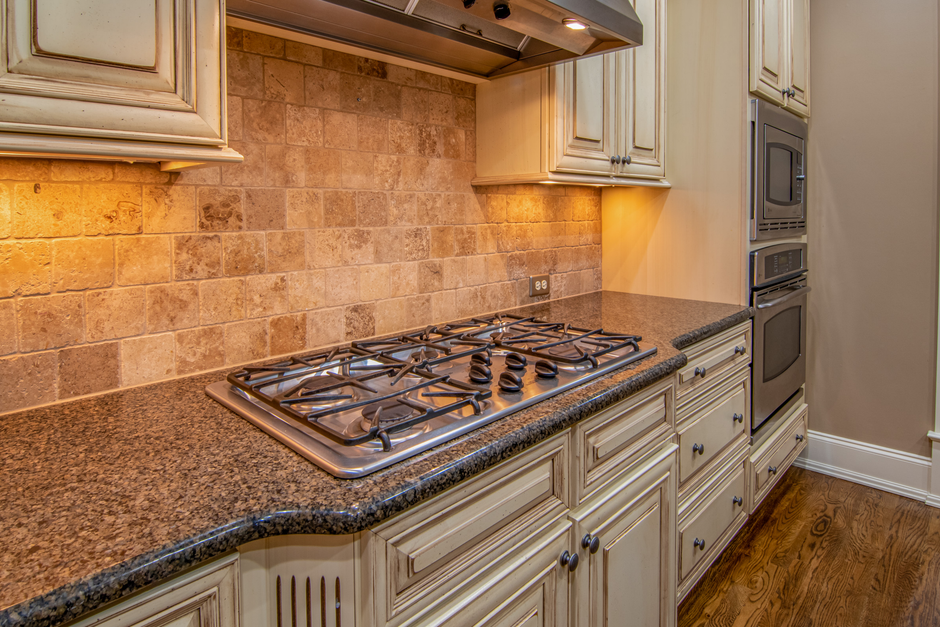
Formosan and native subterranean termites are active along the Gulf Coast. Inspect the toe kicks, back panels and the wall behind cabinets on exterior walls. Warning signs include:
- mud tubes
- hollow-sounding wood
- blistered surfaces
- frass, the fine pellet-like droppings
Any of these means the cabinets, and possibly the wall framing, need professional attention before a top goes on.
Weight Is the Hidden Variable
Engineered stone, granite and quartzite are much heavier than laminate. Cabinets that carried a laminate top for decades were never tested under that load. The boxes, the wall fastening and the floor beneath all have to handle the extra weight. No cabinet should be assumed capable of supporting a stone top without inspection.
If you want a lighter route, laminate is the least demanding option for weaker cabinets. Solid surface materials such as Corian and Avonite are a middle path, and they can be repaired and seamed nearly invisibly. Some materials, including tile and certain thinner slab products, need a plywood or backer subtop over the cabinets. That adds height and weight, and the cabinets must be able to carry it.
Test Level, Fastening and the Floor
Run a Level Across the Tops
Lay a 4 ft level across the cabinet tops front to back, side to side and across the joints between boxes. Small dips can be shimmed during installation. Large or uneven deviations usually point to a floor or wall problem that new countertops will not fix. A countertop does not straighten racked or sagging cabinets.
Confirm the Boxes Are Fastened
Base cabinets should be screwed into studs and to each other. Loose or racked boxes need to be secured and squared before templating. Otherwise the new top can rock or crack.
Consider the Floor Under Older Homes
Homes on pier foundations, common in East Hill, North Hill and other older Pensacola neighborhoods, can have floors that sag or flex. Rigid stone does not tolerate movement underneath it and can crack at seams or sink cutouts. Have the floor framing checked before choosing stone for a raised home.
Match the Sink and Appliances to the Cabinets
The new top changes how several things connect to the cabinets around it.
- Sink: Undermount sinks need a solid top such as stone, engineered stone or solid surface. A heavy cast iron or composite sink may need added support rails or clips. Farmhouse or apron-front sinks require cutting down the cabinet front.
- Dishwasher: Under laminate, dishwashers are usually screwed into the underside of the top. With stone or engineered stone, the brackets switch to side mounting into the neighboring cabinets, and those sides must be sound enough to hold screws.
- Height and fit: A thicker top, or swapping a thick tile and mortar top for a thinner slab, changes counter height. That affects slide-in ranges, dishwasher clearance and the gap at the range. Measure before choosing thickness and edge profile.
- Island overhangs: A seating overhang beyond what the slab can carry needs hidden steel supports, corbels or brackets, or a deeper cabinet. Thinner slabs need support sooner than thick ones, so ask the fabricator what the material requires.
Expect Some Disruption and Touch-Up
Removing the old top can damage cabinets. Laminate tops are usually screwed up from below through corner blocks, which is easy enough. Tile tops set over a mortar bed are heavy and can rack the boxes or split face frames during demolition. Budget for some cabinet touch-up either way.
The backsplash is part of the same job. Pulling an old tile or laminate backsplash almost always tears drywall paper or leaves adhesive behind, so plan wall repair or a new backsplash height at the same time. A countertop swap cannot be done without disturbing the plumbing, backsplash and cabinet edges at least a little.
Cheap Fixes That Keep Good Cabinets in Service
Sagging doors and sticky drawers are usually hardware problems, not reasons to replace sound boxes. Swap hinges and drawer slides before deciding the cabinets are finished.
Salt air matters here. In homes on Pensacola Beach, Gulf Breeze, Perdido Key and along the bayfront, hinges, slides and cabinet screws rust faster. Check for corrosion and plan stainless or coated replacements.
If the boxes are solid but the look is dated, new doors, drawer fronts and veneer, or paint, can be done alongside the countertop job. Sequence the finish work so the top is installed onto finished cabinets.
Think About Your Layout Before You Commit
A new top is templated to the exact cabinet footprint. If you might move the sink, add a kitchen island or change the cabinet layout in a few years, the new top will probably have to be replaced too. Settle the layout first. Then template only after the cabinets are leveled and secured and the sink, faucet and cooktop are on site, since changes after templating mean recutting or a new slab.
Pick a Material That Suits the Cabinets and the Climate
- Laminate: the lightest choice, suited to weaker cabinets.
- Solid surface: repairable, with seams that nearly disappear.
- Butcher block: moves with humidity and needs regular oiling or sealing, especially near the sink in Gulf Coast conditions.
- Engineered stone: brands such as Cambria are popular, but engineered stone is not heat proof or indestructible, since hot pans and hard impacts can damage it. Many resin-based products also discolor in UV, so they are a poor fit for sun-exposed outdoor installs.
- Natural stone: sealing needs depend on the particular stone, so ask the fabricator rather than assuming a fixed schedule.
Ask About Silica Dust
Cutting engineered stone, and to a lesser degree natural stone, releases crystalline silica dust (silicon dioxide), which causes silicosis. Ask that cutting and cutouts be done in the shop with wet methods. Any on-site trimming should be minimal and either wet cut or vacuum controlled.
So, Is It Worth It?
Count it as worth it when the answers line up: the boxes are plywood or otherwise sound, the sink base is dry, there is no termite or flood damage, the level reads close, the floor is stable and the layout is staying put. In that case, new countertops give a kitchen a major visual upgrade while keeping the cabinets you already have. No one can promise a particular return on home value, but a sound kitchen with a fresh top is a reasonable investment.
Count it as a poor use of money when the sink base is soft, the boxes are swollen particleboard, or pests or past flooding have left damage. In those cases, the cabinets should be addressed first, and the countertop decision follows from that.